
The Story Behind Bristol’s Harbourside Cranes
They once helped keep Bristol’s docks moving. Today, the cranes stand as one of the city’s most recognisable waterfront landmarks, full of history, atmosphere and quiet drama.
More than just cranes on the skyline
Bristol Harbourside Cranes are among the most recognisable landmarks on Bristol’s waterfront and have become a lasting symbol of the city’s maritime heritage.
For anyone who knows Bristol, the Harbourside cranes are hard to ignore. They rise above the water with a kind of industrial elegance, part machinery, part architecture, part memory. To some, they are simply old dockside equipment. To others, they are one of the clearest reminders of what Bristol used to be: a working port, a trading city, and a place shaped by water, labour and movement.
The four electric cargo cranes outside M Shed were built in the 1950s, during a period when Bristol’s City Docks were still alive with commercial activity. They were used to move cargo between ships, railway wagons and the quayside, helping to keep the harbour working at a time when the docks were an essential part of the city’s economy.
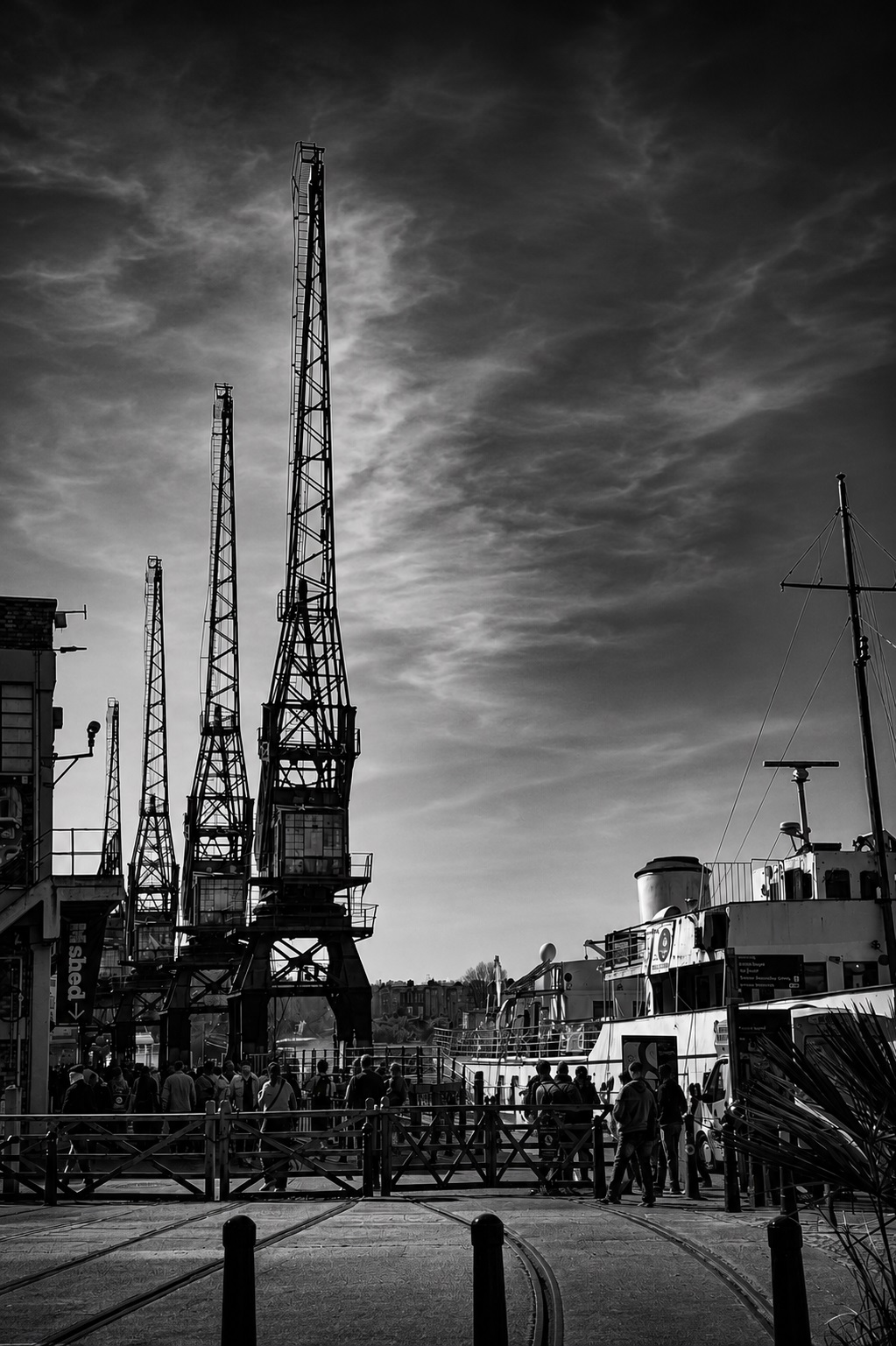
I would imagine the Bristol Harbourside Cranes have been photographed thousands of times over the years, but they never seem to look exactly the same twice. In bright weather, the steelwork can look crisp and architectural. Under darker skies, the cranes become silhouettes, casting strong lines and shadows into the harbour skyline.
I have always felt a personal connection to this part of Bristol. My own family has a history of working in and around the docks, and my father was the lock keeper at Netham. He was also named Lock Keeper of the Year, which is something I have always been proud of. So when I look at the cranes, I do not just see old machinery. I see a place that meant something to real people and real families.
Why Bristol Harbourside Cranes still look so striking today
Part of the appeal of the cranes is the contrast. The Harbourside around them has changed dramatically. Warehouses have become museums, bars, restaurants, flats and walkways. What was once a hard-working industrial dock has become one of Bristol’s most visited public spaces.
Yet the cranes still hold their ground. Their steel frames, angular shapes and weathered presence give the waterfront a depth that newer developments could never create on their own. They stop the Harbourside from becoming too polished. They remind us that the city has history, grit and character.
In black and white, they take on an even stronger presence. The detail of the metalwork, the shape of the jib, the reflections on the water and the heavy sky above the harbour all work together.
Can you still go inside the cranes?
One of the best things about Bristol’s cranes is that they are not completely static exhibits. M Shed runs crane visits at selected times during the year, giving people the chance to experience the electric dockside cranes up close and learn more about the part they played in the working life of the docks.
It is worth checking M Shed’s official listings if you want to visit, because dates and availability can change throughout the year. For anyone interested in Bristol’s industrial history, it is a rare chance to step inside a piece of the city’s past rather than just look at it from the quayside.
Nearby, the Fairbairn Steam Crane adds another layer to the story. Built in the 19th century, it is one of the most important surviving dockside cranes in the country and a reminder that Bristol’s relationship with engineering, shipping and heavy industry goes back far beyond the 1950s.
The Iconic Cranes
Reimagined from my original Bristol photograph, this print captures one of the city’s most recognisable landmarks beneath dramatic skies. The changing weather, strong architectural lines and industrial character of the cranes create a piece that feels both historic and contemporary.
It works particularly well in black frames, modern interiors, offices, hallways and rooms where you want something with a strong Bristol connection rather than generic wall art.
View The Iconic Cranes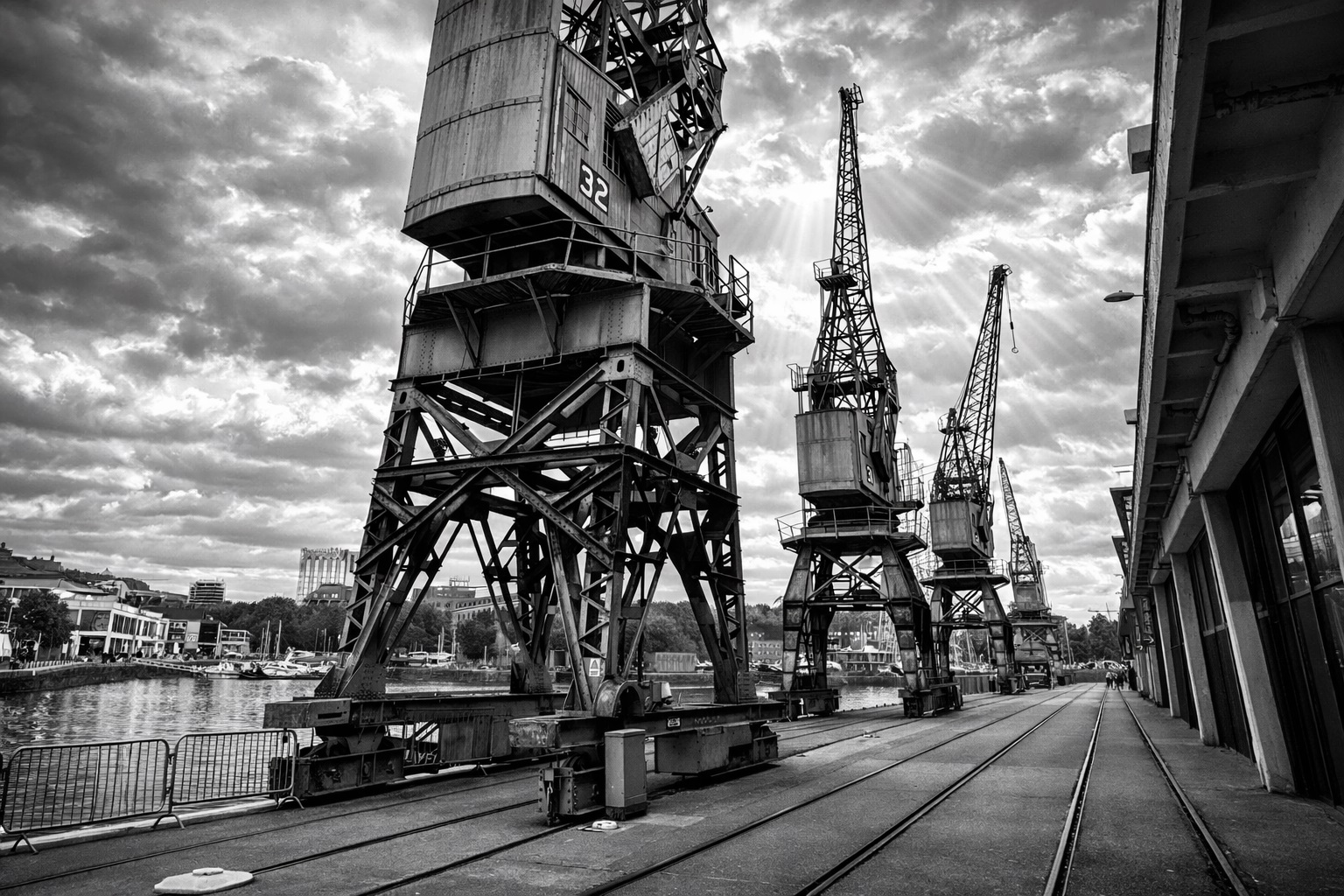
More from the Harbourside Collection
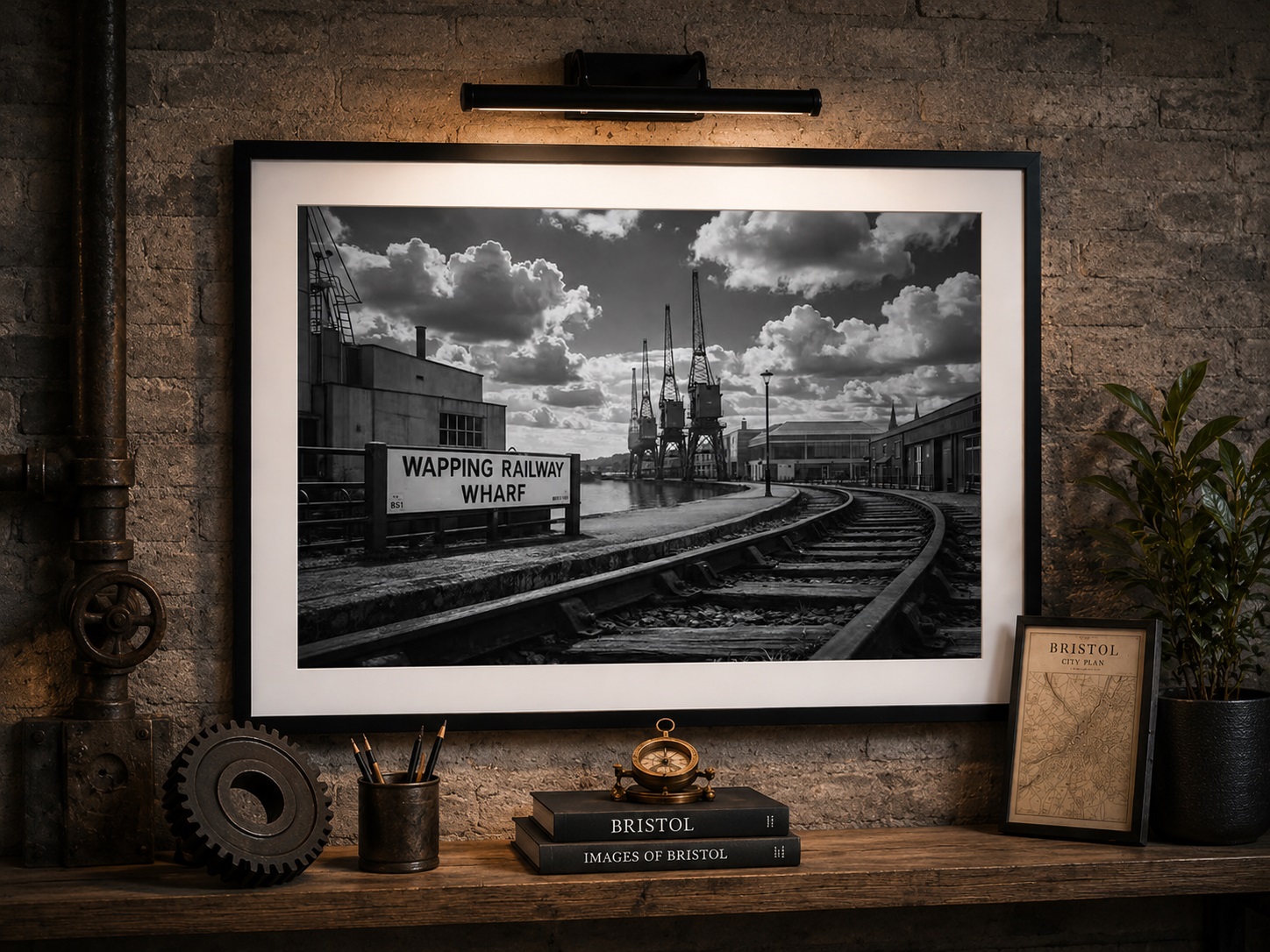
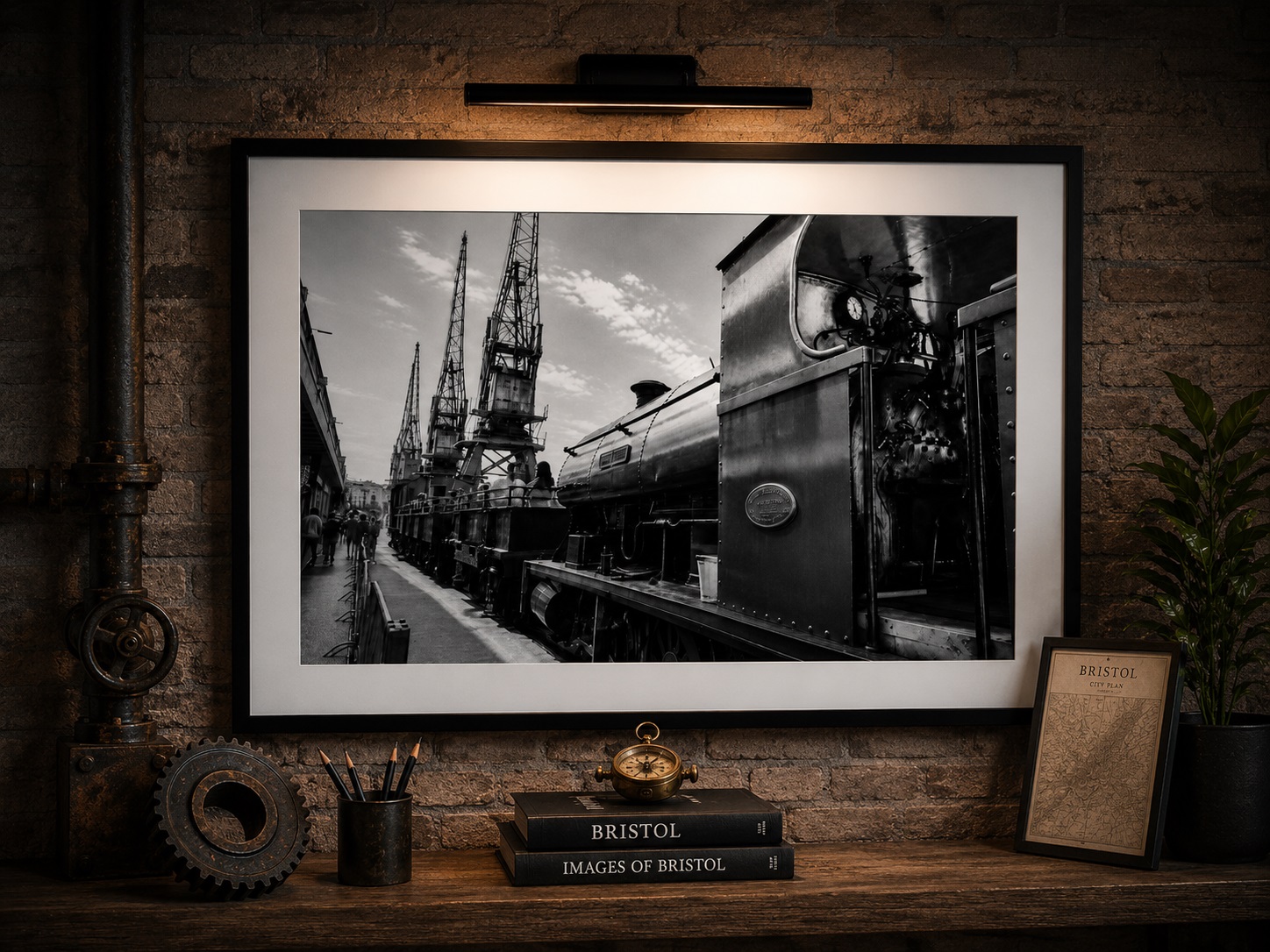
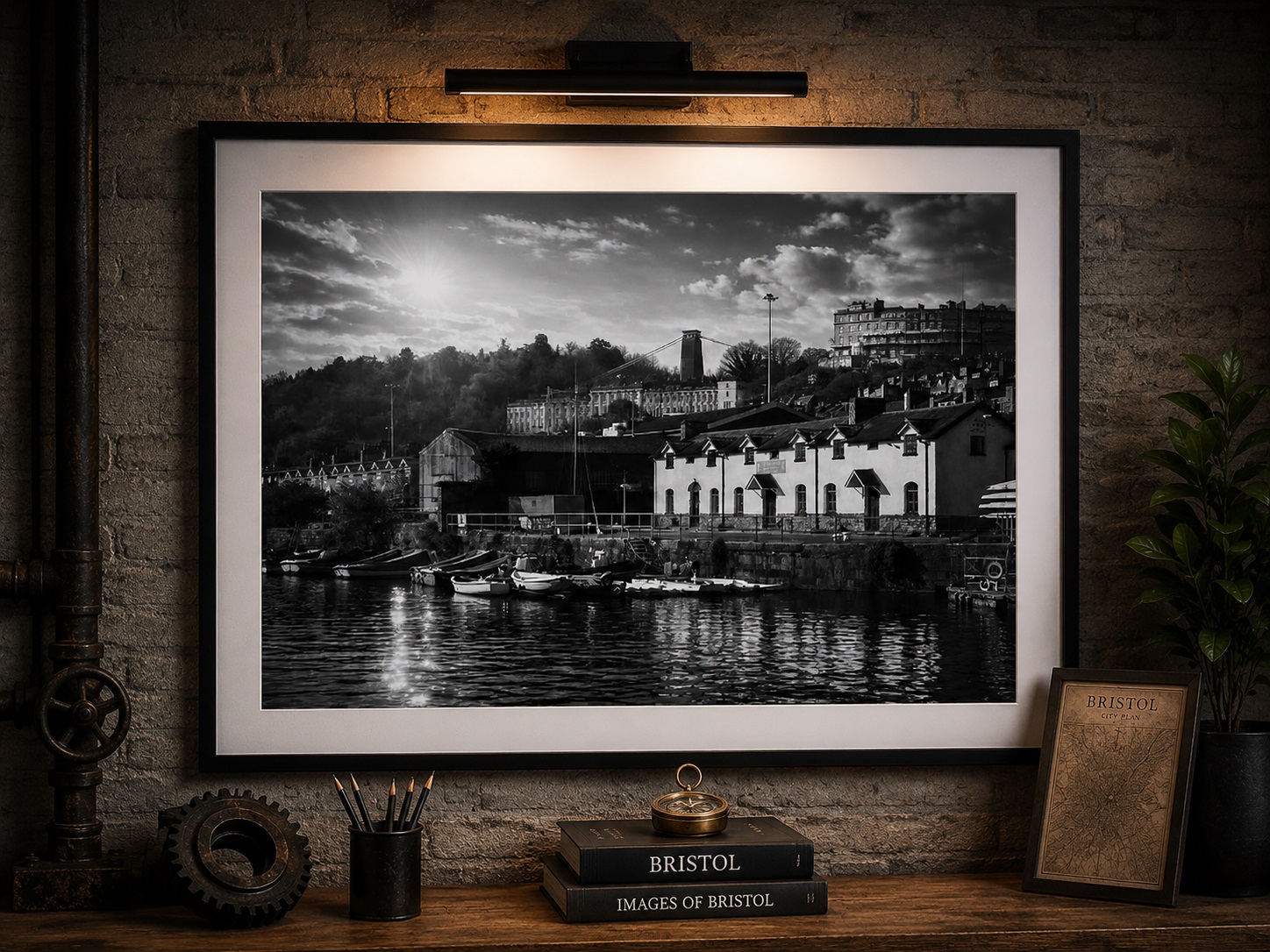
The cranes are only one part of the harbour story. The wider collection includes other Bristol waterfront scenes, each reimagined from original photographs and designed to capture the mood of the city.
A landmark that still belongs to Bristol
The cranes are not beautiful in a soft or obvious way. They are beautiful because they are honest. They were built for work, not decoration. Their purpose was practical, heavy and physical. But over time, as the harbour changed around them, they became something else as well.
They became a marker of place. A reminder of Bristol’s dock workers, engineers, lock keepers, traders, railway lines, ships and warehouses. A reminder that the city’s character has always come from more than pretty views. It comes from work, movement, resilience and reinvention.
That is why the Harbourside cranes continue to make such powerful Bristol wall art. They tell a story without needing to shout. They feel local without being obvious. And for anyone with a connection to the city, they carry a sense of memory that is hard to recreate.
Explore more Bristol collections
From the drama of the harbour to the elegance of Clifton and the character of Bristol’s streets, each collection is built around familiar places reimagined as striking wall art.
Harbourside Collection Clifton Collection Street Collection